
Table of Contents
ToggleA whole house air purifier can dramatically improve indoor air quality by filtering out dust, pollen, pet dander, and other contaminants before they circulate through your home. Unlike portable units that treat a single room, a whole house air purifier integrates into your HVAC system to clean the air throughout every room, a major upgrade for anyone dealing with allergies, asthma, or simply stale indoor air. While professional installation runs $2,000 to $3,500 depending on system complexity and ductwork, a confident DIYer can handle the installation themselves and save significantly on labor. This guide walks you through the entire process, from assessing your home’s needs to making your first filter change.
Key Takeaways
- A whole house air purifier installation integrates into your HVAC system to filter air throughout your entire home, removing dust, pollen, and contaminants more effectively than portable units.
- Professional installation costs $2,000–$3,500, but confident DIYers can handle the installation themselves by measuring ductwork correctly, using HVAC-rated sealant, and securing connections with sheet metal screws.
- Proper sealing of all seams and connections is critical to prevent unfiltered air from bypassing the filter media, which can reduce efficiency by 30–40% if done incorrectly.
- Choose the right filter grade (MERV-13 for allergies, MERV-15 or HEPA for asthma) and verify your furnace’s CFM rating can handle the static pressure without straining the system.
- Replace filters every 2–6 months depending on type and home conditions, inspect seals annually, and keep return air inlets clear of obstructions to maintain peak performance and avoid furnace damage.
Understanding Whole House Air Purifiers And Why Installation Matters
A whole house air purifier sits between your return air duct and your HVAC furnace or air handler, filtering all air that cycles through your system. Unlike window AC units or portable devices, it treats the entire home in one go. Most systems use either a MERV-13 to MERV-16 pleated filter (captures particles down to 1 micron) or a HEPA filter (removes 99.97% of particles at 0.3 microns and larger). Some premium models add UV-C light or activated carbon to tackle odors and biological contaminants.
Proper installation is critical. A loose-fitting filter allows unfiltered air to bypass the media entirely, a common mistake that defeats the whole purpose. Incorrect duct connections or improper sealing can reduce efficiency by 30–40%. You also need to ensure your existing HVAC system has adequate static pressure (air resistance through the filter) to maintain airflow: oversized filters in undersized returns cause the system to work harder and may void your furnace warranty.
The good news: if your home already has ductwork and a central HVAC system, installation is usually straightforward. You’ll need basic carpentry and HVAC knowledge, proper measurements, and a few hours of work.
Assess Your Home’s Current Air Quality And Needs
Start by determining what you’re filtering for. If household members have allergies, a MERV-13 filter is a solid baseline: for asthma or severe sensitivities, step up to MERV-15 or HEPA. If odors from cooking, pets, or smoke are the main concern, look for a unit with activated carbon media. Check if anyone is immunocompromised or has respiratory issues, this changes your filter grade and replacement frequency.
Next, identify your HVAC system type. Open your furnace closet or attic and locate your air handler (a metal box, usually 2–3 feet tall). Check whether it’s a forced-air furnace or heat pump, and note if you have return air ducts visible. Some homes have multiple returns: others use a central return. The location of the main return air duct or filter rack is where your new purifier installs.
Measure the return air ductwork. Most residential ducts are 14×25 inches, 16×25 inches, or 20×25 inches in nominal size (actual dimensions are ½ inch smaller per side due to framing conventions). Whole house purifiers come in standard sizes matching these: ordering the wrong size means wasted money and a poor seal. Also check your furnace’s nameplate for CFM (cubic feet per minute) airflow rating, this tells you if the system can handle the purifier’s static pressure without straining.
Gather Tools, Materials, And Safety Equipment
Materials:
• Whole house air purifier unit (correct ductwork size)
• Duct tape (heavy-duty, rated for HVAC use: regular duct tape fails in this application)
• Sheet metal screws (¼-inch, self-tapping) and a few pop rivets (if securing metal ducts)
• Caulk or acoustical sealant (for sealing seams: avoid silicone near furnace heat)
• Flexible duct connector (if needed for transitions)
Tools:
• Tape measure
• Drill or driver (for sheet metal screws)
• Screwdriver set
• Utility knife (for cutting drywall or insulation if rerouting ducts)
• Flashlight or headlamp
• Adjustable wrench (if disconnecting existing filter racks)
Safety Gear:
• Safety glasses (dust and debris fall from above during ductwork opening)
• Respirator or N95 mask (furnace dust and fiberglass insulation irritate lungs)
• Nitrile gloves (metal edges cut: old insulation irritates skin)
• Ear protection (if using power tools in tight spaces)
Turn off your furnace at the breaker before starting. Do not work on live electrical systems unless you’re licensed. If your system uses high-voltage controls or you’re uncomfortable with wiring, hire a pro for that portion.
Step-By-Step Installation Process
1. Locate And Prepare The Installation Point
Turn off the furnace and locate the main return air duct leading into your air handler. This is where the purifier installs. If you have an existing filter rack or return air box, you may remove it and replace it with the purifier frame, or install the purifier upstream in the duct itself, check your unit’s manual for the manufacturer’s recommendation.
If you’re installing in existing ductwork, you’ll need to open the return air duct carefully. Use a utility knife to cut a clean opening if working with sheet metal or flex duct. Measure the purifier’s duct collar (the connection point) and mark where it’ll sit.
2. Install The Purifier Frame
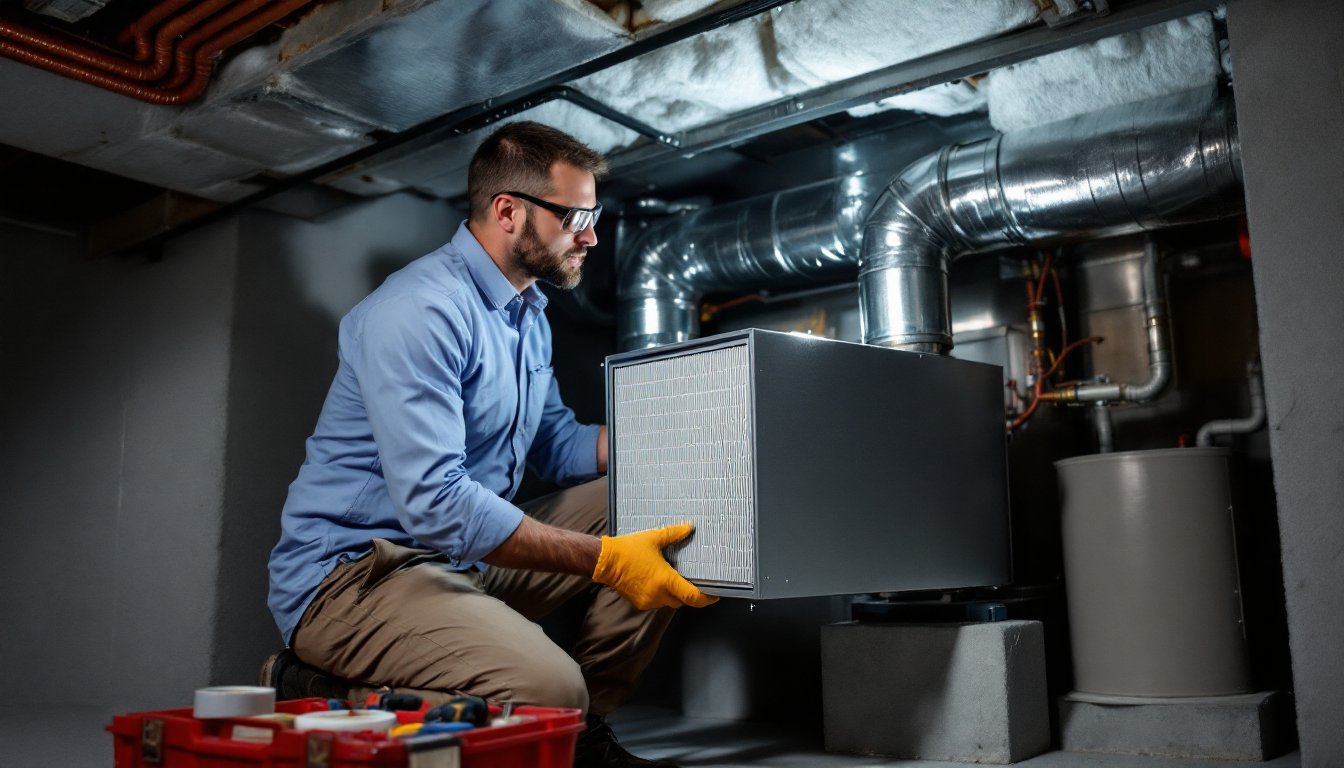
Position the air purifier frame so its inlet faces the return air duct and its outlet faces the furnace. The filter should sit vertically in most residential installations (check the manual, some are horizontal). Secure the frame using sheet metal screws (4–6 per side is typical). Drill pilot holes first to avoid cracking welds on the metal frame.
For a ductwork connection, use self-tapping sheet metal screws and seal all gaps with HVAC-rated duct sealant (mastic caulk, not silicone caulk, silicone fails at furnace temperatures). Duct tape alone won’t hold: it’s a temporary fix that degrades over time.
3. Seal All Seams And Connections
This is non-negotiable. Even small gaps let unfiltered air bypass the filter media. Run your hand along every connection point. Apply sealant liberally to the seams between the purifier housing and ductwork. Let it cure per the product instructions (usually 24 hours) before running the system.
4. Install The Filter
Slide the pleated filter or HEPA cartridge into the frame, ensuring it sits flush with no gaps around the edges. The filter should be snug but not forced. Note the airflow direction arrow on the filter frame, it should point toward the furnace (the outlet side).
5. Test The System
Turn the furnace back on and listen for any unusual noise (whistling or rattling indicates a poor seal). Set the thermostat to “fan on” and let it run for 15 minutes. Check that all connections are cool to the touch, a warm junction suggests a leak or blockage.
Monitor your furnace’s performance over the next week. If the system cycles frequently or the return air gets warm, the static pressure is too high and the furnace is working too hard: you may need a more permeable filter grade or professional evaluation.
Common Installation Mistakes To Avoid
Undersizing or oversizing the filter frame. Whole house purifiers must match your ductwork dimensions. A frame that’s too small allows air to flow around it: too large and it won’t fit or seal. Always measure twice and order the correct size.
Using standard duct tape as the sole seal. Duct tape fails within months in furnace environments due to heat and vibration. Always back duct tape seams with mastic sealant or metal screws.
Installing the filter backwards. The airflow arrow on the filter frame matters. Reversed installation blocks airflow and strains the furnace. Before sealing everything, double-check that the arrow points toward the furnace outlet.
Ignoring static pressure limits. Most furnaces tolerate up to 0.5 inches of water column (IWC) of static pressure from the filter. Exceeding this causes the furnace to short-cycle or fail. If your current ductwork is undersized or heavily restricted, you may need a larger filter frame or lower-MERV filter to maintain airflow.
Skipping the cure time on sealant. Turning on the furnace before mastic cures can crack the seal or allow air to leak. Wait the full 24 hours if possible, or at least 4 hours before running the system.
Forgetting to seal internal ductwork gaps. If you rerouted ducts or cut into existing returns, seal every internal seam as well as external ones. Unfiltered air finds every gap.
Maintenance And Long-Term Care Tips
Filter replacement is the most critical maintenance task. MERV-13 pleated filters typically last 3–6 months depending on home dust load: MERV-15 and HEPA filters may clog faster and need replacement every 2–4 months. Mark your calendar and set a phone reminder. A clogged filter reduces airflow, forces the furnace to work harder, and loses its filtering ability.
Check the filter visually every month. If it looks dark gray or brown, it’s likely due for a change. When replacing, turn off the furnace, slide the old filter out, and slide the new one in with the airflow arrow pointing toward the furnace.
Inspect seals annually. Look for cracks in caulk around the filter frame and ductwork connections. Recaulk as needed. Check that all screws remain tight: vibration from the furnace fan can loosen fasteners over time.
Keep the area clear. Ensure nothing blocks the return air inlet. Furniture, insulation, or stored items reduce airflow and force the furnace to work harder. Return air inlets need at least 6 inches of clearance.
If your home recently saw construction or renovation, replace the filter sooner, sawdust loads the filter much faster than normal household dust. Budget roughly $30–$80 per filter replacement, depending on filter type and where you buy.
For complex issues, such as excessive noise, pressure problems, or airflow concerns, contact an HVAC technician. Whole house purifiers are relatively simple, but your furnace system deserves professional care if something goes wrong. Many homeowners finding they need professional help discover that costs for hiring a central air cleaner installation pro are reasonable given the expertise required. If you’re unsure about your system’s static pressure tolerance or filter grades, consulting advanced HVAC guidance can prevent costly mistakes. Understanding whole-home air purifier installation costs upfront helps you budget for the project and professional options if needed.
Conclusion
Installing a whole house air purifier is a worthwhile DIY project for most homeowners with a central HVAC system. The key to success is careful measurement, proper sealing, and understanding your furnace’s limitations. Take your time during installation, don’t rush the curing time on sealant, and stay on top of filter replacement, that’s where most long-term problems originate. Your lungs (and furnace) will thank you.