
Table of Contents
ToggleIf you’ve noticed soap scum buildup, dry skin, or that metallic taste in your tap water, your home’s water quality might need attention. A whole house water filter and softener combo tackles two problems at once: filtering sediment, chlorine, and contaminants while removing hard minerals like calcium and magnesium. Unlike point-of-use systems that treat water in one sink or shower, these installed-at-the-main systems protect every faucet, appliance, and water line in your home. Whether you’re dealing with municipal water issues or well-water challenges, understanding how combo systems work and what to look for helps you make an well-informed choice that fits both your water chemistry and your budget.
Key Takeaways
- A whole house water filter and softener combo protects every faucet and appliance by filtering contaminants while removing hard minerals, eliminating the need for multiple point-of-use systems.
- Water hardness above 60 PPM or 3.5 GPG causes buildup on pipes and appliances; a quality combo system can improve appliance efficiency by up to 20% and reduce utility costs.
- Flow rate (10–15 GPM for most homes), tank capacity, and metered regeneration type are critical features that directly impact water pressure and salt savings.
- Monolithic units cost $800–1,500 and suit smaller homes, while dual-tank systems ($1,500–3,500+) are ideal for high-hardness water and high-demand households.
- Start with a water test ($15–50 basic or $150–300 comprehensive) to guide your system choice and calculate total cost of ownership over 10 years before committing.
- Installation typically takes 4–8 hours for experienced DIYers; budget $200–400 for professional labor if needed, and plan a follow-up service call at month three to optimize settings and prevent costly failures.
What Is a Water Filter and Softener Combo System?
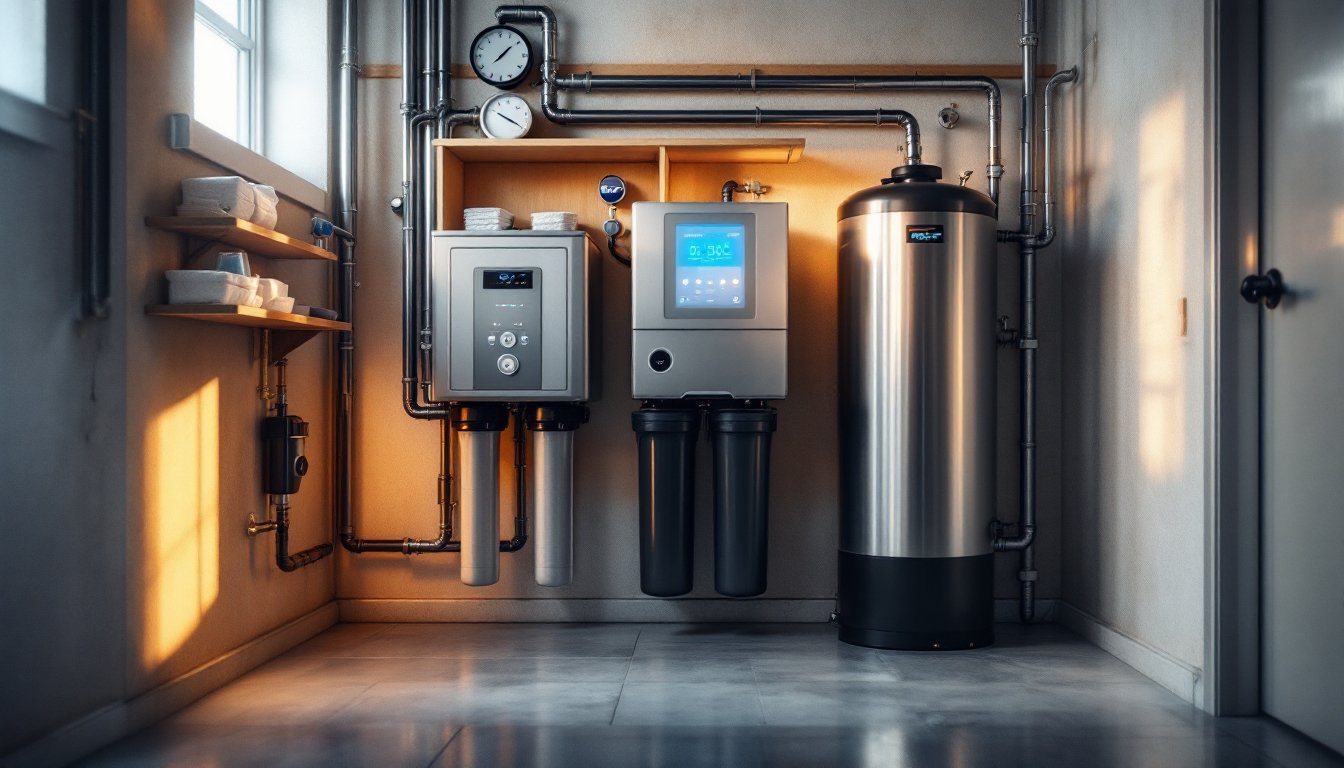
A combo unit merges two water treatment technologies into a single tank or dual-tank setup. The filtering stage removes particulates, chlorine, and other contaminants using carbon, sediment media, or both. The softening stage uses ion-exchange resin to swap hard minerals for sodium or potassium ions, leaving your water “soft.”
Monolithic combo units, one tank doing both jobs, are compact and easier to fit into tight spaces like basements or utility closets. Some use a layered-media approach where filtration sits above the softening resin. Dual-tank systems keep filtration and softening separate, which lets each stage work at full capacity and simplifies media replacement. Both styles deliver whole-house protection, but they handle flow rates and maintenance differently.
Hard water isn’t dangerous, but it costs you. It reduces soap effectiveness, clogs showerheads, shortens appliance lifespan, and leaves spots on dishes and glassware. Untreated tap water may also contain chlorine taste/odor, sediment, or (in some regions) higher levels of specific contaminants. A combo system addresses these issues without buying bottled water or installing point-of-use filters at every sink.
How These Systems Improve Your Home Water Quality
Water hardness is measured in parts per million (PPM) or grains per gallon (GPG). Water above 60 PPM or 3.5 GPG is considered hard: above 180 PPM or 10.5 GPG is very hard. Softening reduces buildup on pipes, water heaters, and washing machines, and it directly extends their working life.
The filtering component tackles chlorine, sediment, and some chemical contaminants depending on the media type. Activated carbon filters chlorine and improve taste/odor. Sediment filters remove sand, silt, and rust particles that make water cloudy. Multi-stage systems use both. Some advanced combos include additional media like KDF-55 (which reduces chlorine and heavy metals) or catalytic carbon (which handles chlorine and chloramine better than standard carbon).
Real-world benefits emerge in weeks: softer skin and hair, brighter laundry, spotless dishes, and noticeably better-tasting tap water. You’ll also see longer intervals between tankless water heater descaling, fewer service calls on your HVAC humidifier, and reduced soap and shampoo consumption. According to home appliance testing at Good Housekeeping, softened water can improve appliance efficiency by up to 20%, translating to lower utility bills over time.
Key Features to Look For in a Quality Combo Unit
Flow rate matters most. Most homes need 10–15 gallons per minute (GPM) at the main line. If your peak demand (multiple showers + washing machine) exceeds the unit’s flow capacity, water pressure drops noticeably. Check the spec sheet for “flow rate at working pressure,” usually listed at 40–60 PSI.
Tank capacity determines how often the system regenerates (cleans itself). For a family of four with typical hard water (10–12 GPG), a 32,000–48,000 grain capacity softener removes minerals for 5–10 days before needing regeneration. Larger tanks mean fewer regeneration cycles, which saves salt and water. But, they take up more space.
Regeneration type varies. Time-clock systems regenerate on a fixed schedule (weekly, for example), regardless of actual water use, wasteful if you travel. Demand-initiated (metered) regeneration tracks water usage and regenerates only when needed, saving 10–20% of salt annually. Smart systems learn your patterns and optimize further.
Filtration stages and media quality directly affect performance. Single-stage filtration (sediment only or carbon only) is cheaper but limited. Dual-stage systems combine sediment and carbon for broader protection. The quality of the carbon and filter cartridge lifespan (typically 6–12 months) matter. Look for NSF/ANSI 42 certification (taste/odor reduction) and NSF/ANSI 53 (specific contaminant reduction).
Media replacement costs add up. Some units use proprietary cartridges (locked to the brand), while others use standard filters. Standard filters are cheaper and easier to source.
Salt type affects softener efficiency. Some units work with pellets, crystals, or blocks. Pellets dissolve most cleanly: blocks create bridging (empty space above solid salt). Check what your local supply carries and factor salt delivery into your budget.
Installation and Maintenance Considerations for DIYers
Most homeowners can handle basic installation, but know your limits. You’ll need to locate your main water shut-off valve, understand your water pressure (a simple pressure gauge costs $10–20), and have basic plumbing skills (cutting copper or PVC pipe, connecting compression fittings).
If your home runs on well water, you may need a sediment pre-filter before the combo unit to protect the softener from clogging, a common oversight. Municipal water usually doesn’t require this unless your pressure-reducing valve is set above 80 PSI (which can damage the unit).
Installation location matters. Place the unit near your main shut-off, away from freezing temperatures, and with clearance for tank opening (you’ll access it for salt or media). A basement, utility room, or garage works well. Avoid unheated crawlspaces in cold climates: frozen water inside the tank can crack it.
Licensing and permits vary by location. Some jurisdictions require a licensed plumber to install water treatment systems: others let homeowners DIY if the work passes inspection. Call your local building department before starting. Plumbing permits typically cost $50–150 and take 1–2 weeks.
Maintenance is straightforward. Add salt (or potassium if you’re salt-sensitive) every 6–8 weeks depending on your hardness and tank size. Filter cartridge replacement happens every 6–12 months depending on water quality. Plan for a service call if you notice slow flow, unusual noises, or water leakage, these signal resin degradation or a control-valve issue. Most repairs run $200–500 if you can’t DIY them.
According to DIY repair guides from Family Handyman, homeowners should flush their water softener annually to maintain efficiency and catch issues early.
Top Combo System Options and What to Expect
Monolithic units (one tank, both functions) suit smaller homes with moderate hardness (under 12 GPG). They cost $800–1,500 installed and use 15–25 pounds of salt monthly. Brands like Fleck and GE make reliable mid-range models. Downside: when one function fails, you may replace the whole unit. Upside: less plumbing, less floor space.
Dual-tank systems run $1,500–3,500+ installed. The separate filter tank and softener tank let you run water during regeneration (single-tank systems shut off briefly). Ideal for high-hardness water (12+ GPG) or high-demand households (6+ people, multiple showers daily). Salt usage ranges 20–40 pounds monthly. Brands like Pentair, Culligan, and water-tech specialists offer solid options.
Smart systems ($2,000–4,000+) use WiFi-connected controls to monitor usage, send filter-replacement reminders, and report regeneration cycles to your phone. They optimize salt usage and let you remotely adjust settings. If you value data and convenience, they’re worth the premium. Otherwise, standard metered systems deliver similar softening at half the cost.
Well-water specific combos are tankless or ultra-compact models designed for high sediment loads. They cost 10–20% more but prevent common softener failures. If you test your water first, you’ll know if you need one.
Expect installation to take 4–8 hours for a DIYer with plumbing experience. Hire a pro if you’re uncertain: expect $200–400 labor on top of equipment cost. Home maintenance experts at Today’s Homeowner recommend getting the system professionally flushed and balanced during commissioning to ensure optimal performance from day one.
Making Your Final Choice: Cost vs. Performance
Start with a water test. A basic hardness test costs $15–50 at a hardware store or through your county extension office. A comprehensive test ($150–300 from a lab) reveals iron, manganese, nitrates, bacteria, and other specifics. This guides you toward the right system rather than buying overkill.
Calculate total cost of ownership over 10 years: equipment, installation, salt, filter cartridges, and occasional repairs. A $1,200 combo with $20 monthly maintenance costs $1,200 + (10 × 12 × $20) = $4,600 total. A $500 point-of-use filter system for one bathroom costs $500 plus $200/year per cartridge, which adds up fast if you need multiple units. Whole-house systems usually win economically if you stay more than 3–5 years.
Salt-free softeners exist but don’t remove hardness: they condition water (preventing scale without softening). They’re cheaper upfront ($400–800) but don’t deliver the full benefits homeowners expect. If you have hardness above 15 GPG, a salt-based softener is more reliable.
Budget time for installation and trial-and-error. If you’re a plumbing novice, hire a pro. If you’ve done basic copper-pipe work, combo installation is manageable. Either way, plan a follow-up service call in month three to check for leaks, confirm flow, and optimize settings, a small cost that prevents expensive failures later.
Conclusion
A whole house water filter and softener combo solves two problems with one system, protecting your appliances, your skin, and your wallet. The right unit depends on your water chemistry, household size, and whether you’re willing to handle basic maintenance. Test your water first, match the system size to your peak demand, and budget for installation, professional or DIY. Done right, you’ll notice cleaner dishes, softer laundry, and fewer service calls within weeks.