
Table of Contents
ToggleTiny house living has exploded in popularity over the past decade, attracting homeowners seeking financial freedom, sustainability, and a simpler lifestyle. But moving a tiny house isn’t like renting a U-Haul and calling your buddies for a weekend. A tiny house, whether it’s permanently fixed to a foundation or built on a trailer, requires specialized logistics, expertise, and careful planning. This guide walks you through what actually happens when you need to relocate a tiny home, from understanding the unique challenges to vetting movers, budgeting realistically, and preparing your house for transport. Whether you’re upgrading to a new location or downsizing completely, knowing what you’re walking into makes the process far less stressful.
Key Takeaways
- Tiny house movers require specialized expertise and DOT compliance because homes on trailers are legally classified as oversized vehicles, not standard relocations.
- Realistic budgets for tiny house moving range from $8,000–$15,000 for short-haul moves and $15,000–$35,000 for interstate moves, plus $2,000–$5,000 in permits and site-specific work.
- Verify that your moving company carries proper licensing (DOT number), general liability insurance, and cargo insurance specific to tiny houses, and request proof in writing.
- Pre-move preparation including securing interior items, documenting condition with photos, and professional utility disconnects prevents costly damage and safety hazards during transport.
- Permits are legally required and enforced; your moving company should handle applications, but confirm filings are complete before transport begins to avoid five-figure fines.
- Check your destination’s zoning and foundation requirements in advance, as some jurisdictions mandate immediate permanent foundations while others allow grace periods.
What Makes Tiny House Moving Different From Traditional Relocations
Moving a tiny house isn’t just a scaled-down version of moving a full-size home. The physical and logistical challenges are distinct enough to require specialized knowledge and equipment.
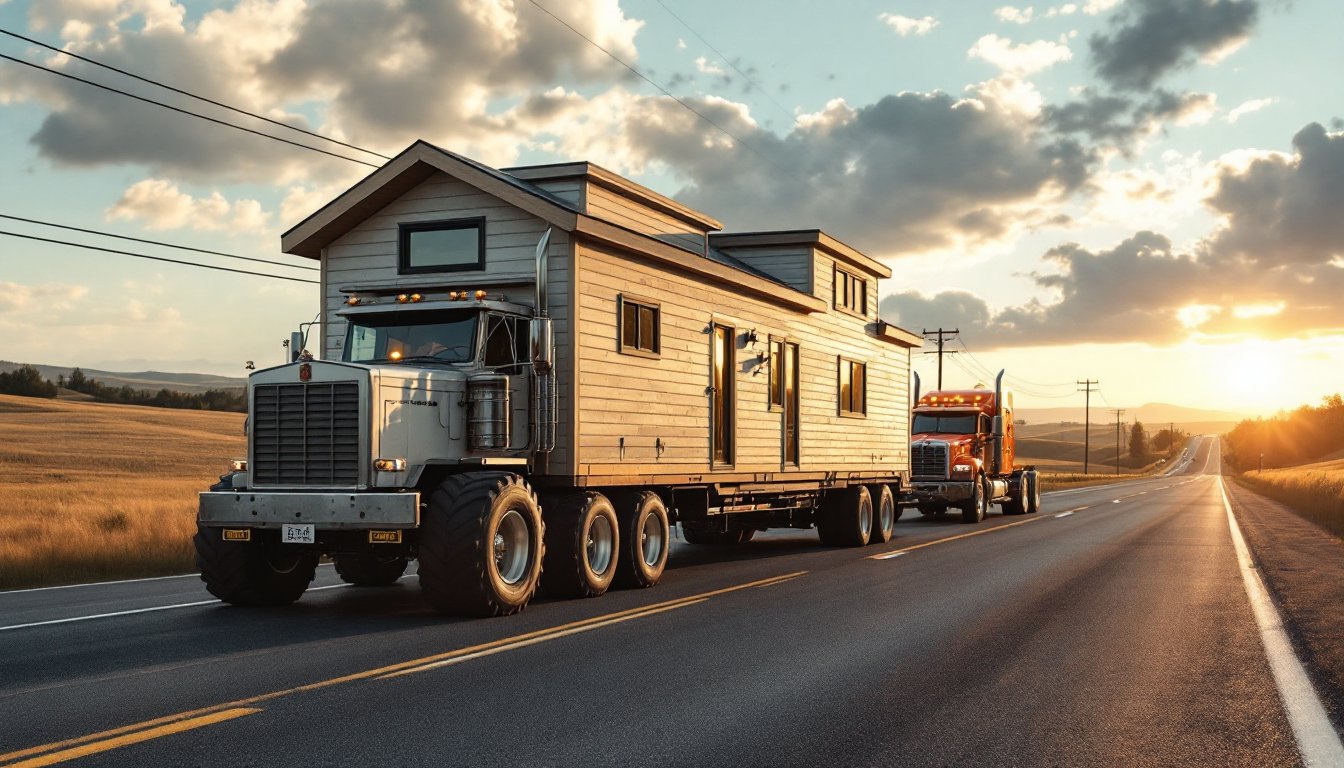
First, the structural realities differ radically. A traditional house sits on a permanent foundation: moving it requires cutting utilities, dealing with foundation breakaway, and navigating easement issues. Most tiny houses, but, sit on trailer chassis (typically 24-40 feet long and 8.5 feet wide) that are engineered to bear the entire structure’s weight during transport. This means the tiny house itself becomes a vehicle, subject to DOT (Department of Transportation) regulations for oversized loads.
Second, road permits and route planning are far more involved. An oversized load traveling interstate requires special permits from each state it passes through. Route planners must account for bridge weight limits, height clearances (overhead power lines, tunnels, overhanging tree branches), road surface conditions, and local restrictions on which highways can handle the load. A standard moving truck doesn’t face these constraints.
Third, utility disconnection and reconnection require precision. Unlike traditional moves where utilities are capped at the foundation, tiny houses on trailers need careful electrical, plumbing, and gas disconnects that won’t damage the system or create safety hazards during transit. Reconnection at the destination site demands site-specific electrical and plumbing permits, especially if you’re connecting to a new foundation or utility hookup.
Finally, the cost-to-distance ratio is steeper. Tiny house moving isn’t priced by the truck capacity or cubic footage, it’s priced by the logistics, permits, and specialized equipment required. Moving a tiny house 50 miles costs far more than moving a conventional house the same distance because the setup and breakdown are nearly identical whether you travel 10 miles or 500 miles.
Finding the Right Tiny House Moving Company
Not every moving company handles tiny houses. Standard residential movers simply aren’t equipped, both mechanically and legally, to haul a home-sized load down the highway. You need a company with experience in specialized, oversized-load moves.
Start by searching specifically for “tiny house movers” or “house moving specialists” in your region. Companies that move modular homes, mobile homes, or build tiny houses themselves often partner with or directly operate moving services. Your tiny house builder or dealer is a valuable resource: they’ve moved plenty of units and have trusted contacts.
Check online reviews and ask for references from recent moves. Ask potential movers directly: Have they moved tiny houses on your brand and model? Do they handle the permits, or do you? What’s their experience with your destination state or region? A company that’s moved two tiny houses is not the same as one that’s moved 200.
Verify licensing and insurance. Ask for proof of a current DOT number (if they’re moving oversized loads across state lines), general liability insurance, and cargo insurance. The company should carry enough coverage to protect your home if something goes wrong mid-transport. Request the policy details in writing.
What to Look for in a Specialized Mover
Experience with your specific house model matters. Different tiny house builders use different frame designs, axle configurations, and hitch systems. A mover comfortable with one brand may not be familiar with another’s unique requirements.
Transparency in pricing and timeline is essential. Ask for a detailed estimate that breaks down permit costs, fuel, driver time, escort vehicles, and any site-specific services (like temporary utility work). A reputable mover won’t surprise you with hidden fees mid-move. Expect the estimate to come with a range, fuel prices fluctuate, and some site conditions are unpredictable until the mover visits in person.
Ask about contingency planning. What happens if a route becomes impassable due to weather or road construction? Does the company have a backup plan, or will you be charged extra? Are you responsible for unforeseen delays, or does the mover absorb some risk?
The Cost of Moving a Tiny Home
Tiny house moving costs vary wildly based on distance, complexity, and local regulations. Expect a range, not a fixed quote, and understand what’s bundled in.
For a typical interstate move of 500–1,000 miles, budget $15,000–$35,000 for the move itself. Short-haul moves (under 200 miles) often start around $8,000–$15,000. Long-distance moves exceeding 1,500 miles can exceed $40,000. These figures assume a standard 30-foot tiny house on a single-axle trailer moving in good conditions.
Permit costs add $2,000–$5,000 depending on the number of states crossed and local regulations. Some states charge by weight, some by distance, and some have flat fees. A multi-state move requires coordinating permits through each state’s DOT office: the moving company usually handles this but charges a fee.
Fuel is typically a separate line item. Expect $5–$10 per mile for the tractor and any escort vehicles required (many states mandate at least one escort vehicle for oversized loads). A 500-mile move burns significant fuel costs.
Site-specific work, temporary utility disconnects, crane services if you lack proper equipment to unhitch, foundation preparation, or temporary power, adds another $2,000–$8,000 depending on what’s needed.
Budget factors that affect cost: distance, season (winter adds premium pricing), weight and dimensions of your specific house, complexity of the origin and destination sites, and whether you handle permits yourself (slightly cheaper but requires expertise). Financing options exist: some movers partner with lenders for multi-thousand-dollar projects.
Preparing Your Tiny House for Transport
Proper prep determines whether your tiny house arrives in pristine condition or with costly damage. Start this process weeks in advance.
Secure all interior items. Remove or heavily secure anything not fastened down: furniture, decor, appliances, and items in cabinets. Even minor shifts during transport compound over hundreds of miles. Use tie-down straps to secure larger pieces. Empty kitchen cabinets: loose dishes don’t forgive highway vibration. Drain your water tank and flush the toilet: you don’t want sloshing water damage or septic backup during transport.
Inspect and document the current condition. Photograph the entire exterior, roof, undercarriage, and interior in good daylight. Use photos as proof of pre-move condition if any damage disputes arise later.
Disconnect utilities correctly. This isn’t a DIY task, hire a licensed electrician and plumber to safely disconnect power, water, and gas lines. Shoddy disconnects can compromise safety during transport or create issues at the destination. Disconnect propane tanks and secure them according to DOT standards if they’re staying with the house.
Check the hitch and frame. Have a pre-move inspection done by the moving company or an independent tiny house service technician. Look for frame rust, cracked welds, worn tires, and hitch integrity. Address any frame damage before moving: transport can worsen existing issues and void insurance.
Loosen or remove exterior items. Antennas, dish mounts, porch railings, exterior stairs, and deck components should be removed or secured per the mover’s instructions. Anything jutting out increases the house’s footprint and may exceed legal width limits.
Essential Safety and Regulatory Considerations
Permits aren’t optional, they’re legally required and enforced. Moving without proper permits opens you to fines (into the five figures in some states) and legal liability if damage occurs. Your mover should handle most permit applications, but verify they’re filed before transport begins.
Insurance coverage is critical. Your homeowner’s policy typically doesn’t cover transport: cargo insurance through the moving company is non-negotiable. Review what’s covered, some policies exclude damage caused by weather or acts of God. Understand your liability if the house is damaged due to improper prep on your end.
Local zoning and foundation requirements at the destination vary by jurisdiction. Some counties require a permanent foundation immediately after arrival: others allow a grace period. Check with the destination county’s building department before the move. If a new foundation is required, have it ready or budget for post-arrival work.
Driver qualifications matter. The tractor driver must hold a current commercial driver’s license (CDL) with the proper endorsements for the load. Don’t hesitate to ask the moving company for driver credentials. Safety during transport directly affects your home’s condition.
Conclusion
Moving a tiny house demands more forethought than a traditional relocation, but it’s entirely doable with the right partner. Find a mover with proven tiny house experience, understand your costs upfront, and don’t skip prep work. Modern publications like Dwell and Apartment Therapy regularly feature tiny house tours and moving stories that show the real-world impact of thoughtful moves. Plan thoroughly, verify all permits, and expect the process to take longer than you initially estimate. A well-executed tiny house move sets you up for years of successful living in your new location.