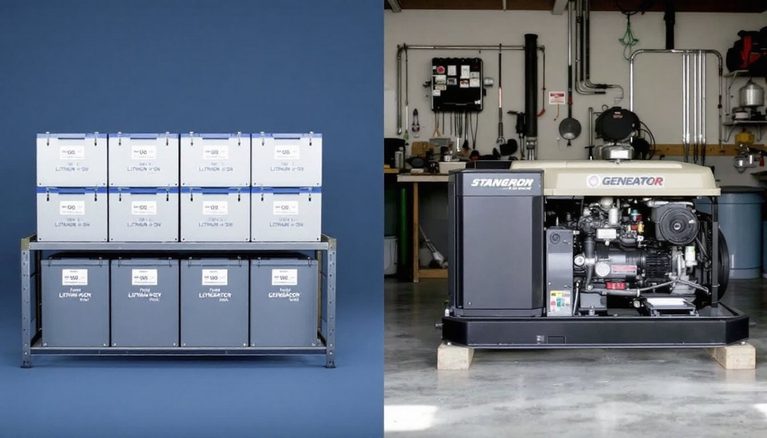
Storm seasons, wildfire shutoffs, and aging infrastructure have more households planning for backup power. The tricky part isn’t deciding whether you want resilience, but choosing the right backbone for it. Battery storage and standby generators solve different problems. The right pick depends on how long your outages last, which circuits you must keep alive, and how you will replenish energy during an extended interruption. A clear plan starts with mapping critical loads, understanding surge demands, and deciding between whole-home coverage and a dedicated critical-loads subpanel. With that blueprint, you can evaluate technical realities like automatic transfer switches (ATS), inverter output, lithium iron phosphate (LiFePO4) battery characteristics, natural gas or propane fueling, and even whether a nearby solar PV array can keep the system going after day one.
- Measure Your Outage Risk and Map Critical Loads
Before comparing equipment, quantify what you need to back up. Note the typical length and frequency of recent outages and list circuits you cannot lose: refrigerator, sump pump, well pump, modem and router, furnace blower, select lighting, medical devices, and garage door opener. Identify 240-volt loads such as a deep well pump or central air. Record both running watts and starting surge; compressors and pumps draw a brief inrush current that can be several times higher than the running load. High-level comparisons such as Battery Storage vs. Standby Generators | Destination cover the basics; the next step is to measure with a plug-in meter, check nameplates, or use a whole-home energy monitor to capture actual peaks.
Translate that list into a wiring plan. Many homes benefit from a critical loads subpanel that feeds only essential circuits. This limits the required inverter or generator size and prevents accidental overloads from an electric range, tank-style electric water heater, or EV charger. If you truly need whole-home coverage, expect larger inverter kVA ratings or generator kW outputs, higher fuel or storage requirements, and stricter siting and permitting constraints.
- Where Battery Storage Excels and Its Real Limits
Battery systems shine for short to moderate outages, especially when paired with solar. An inverter/charger transfers power quickly, keeps electronics stable, and runs silently with zero on-site exhaust. Batteries also enable off-peak charging and peak shaving, reducing bills under time-of-use rates. Modern LiFePO4 batteries handle partial cycling well, and a smart inverter can coordinate with a solar PV array in island mode to recharge during daylight. Load shedding relays can temporarily pause a nonessential circuit so a fridge compressor or sump pump can start without tripping the inverter.
Limits matter. Capacity is measured in kilowatt-hours, not just kilowatts, so a system that can start a well pump may still drain quickly under heavy continuous loads. Depth of discharge affects usable energy and long-term cycle life; repeatedly depleting to near empty shortens battery lifespan. Cold weather reduces available power unless the system has battery heating and a suitable enclosure. Large resistive loads such as electric ranges, electric water heaters, and Level 2 EV charging can consume a day’s storage in an hour or two. A common mistake is sizing only for continuous watts and ignoring starting surge; many inverters list a surge rating in VA that must exceed the biggest motor’s inrush. Another pitfall is assuming solar will refill the bank during storms. Cloud cover, snow, and short winter days drastically reduce charging, so plan for lean scenarios.
- Where Standby Generators Excel and What They Require
Standby generators excel when outages last days or when you must run large 240 volt loads for extended periods. Connected through an automatic transfer switch, a natural gas or propane unit can power a whole house or a critical-loads subpanel indefinitely, as long as fuel is available. Generators handle high inrush currents from well pumps and air conditioners better than most residential inverters, and they do not depend on sun exposure to refill energy.
They do require care. Siting must meet clearances from windows and doors to reduce carbon monoxide entry. Noise regulations, property line setbacks, and HOA rules may limit placement. Natural gas models depend on gas meter capacity and line pressure; in some neighborhoods, simultaneous demand during a storm can become a constraint. Propane systems need an adequately sized tank and safe access for refueling. Maintenance is non-optional: oil and filter changes, fresh air filters, and periodic exercise runs keep engines healthy. Check and replace the generator’s starting battery as needed. Diesel units used in remote settings should be run under meaningful load to avoid wet stacking and should use clean, stabilized fuel. Plan for year-round service access so snow, leaves, or overgrown shrubs don’t block ventilation or technicians.
- Site, Electrical, and Regulatory Constraints That Tip the Decision
Physical realities often choose for you. If your gas meter cannot support an additional large appliance, you may need to upsizing the service before installing a natural gas generator. Small lots or strict noise ordinances can make outdoor placement difficult. Conversely, batteries need structurally sound wall space, the right mounting hardware, and an indoor or outdoor location rated by the manufacturer. Avoid damp basements that flood and exterior walls that bake in direct sun or freeze in winter unless the enclosure is designed for it. Electrical service panels with limited capacity may need upgrades for battery-inverter interconnection or a whole-home ATS. Jurisdictions differ on permits and inspections for both technologies; make sure your plan aligns with local codes well before you order equipment.
A frequent failure point is ignoring window and vent clearances for generators. Exhaust can drift back into a home if you tuck the unit under a deck or beside a basement window. Another is forgetting the recharge path for batteries; without a reliable solar array or grid restoration within the expected runtime, a storage-only system can become a very expensive flashlight.
- Two Real World Backup Plans
Urban rowhouse with frequent, short outages: The homeowner prioritizes silence and has time-of-use rates. No yard space meets generator setbacks, and the HOA prohibits new outdoor equipment. A wall-mounted LiFePO4 battery bank paired with a hybrid inverter supports a critical loads subpanel with the refrigerator, modem, lighting, and furnace blower. A load shedding relay pauses the microwave or toaster if the sump pump starts. The system charges off-peak and can accept solar later. Here, the battery covers typical one- to four-hour interruptions, and bill savings help offset long-term ownership.
Rural home on a well with multi-day storm outages: The property has 240-volt well and septic pumps and central air. A propane standby generator with an appropriately sized tank connects through an ATS to the main panel, and the gas supplier can access the tank in winter. To reduce nighttime noise and fuel burn, a small battery and inverter run low overnight loads. At the same time, the generator charges the battery for a short, efficient window each afternoon. A soft start kit on the air conditioner lowers inrush, so the generator doesn’t need to be oversized. This hybrid plan delivers continuous resilience without relying on sunny weather.
- Build a Recharge and Maintenance Strategy from Day One
Whichever path you choose, design the recharge or refuel plan first. For storage, map the worst-case recharging window with winter solar production and no grid. Configure state-of-charge reserves so you are not cycling to empty every time. If your inverter can start a generator on a signal, program that handoff before storm season and test it quarterly. Label the critical loads subpanel clearly so guests do not unknowingly add a heavy appliance during an outage. Keep inverter and battery management system firmware updated to maintain safe charging profiles and communication with solar inverters.
For generators, schedule routine maintenance and keep records. Set the weekly exercise run and verify it occurs. Test the automatic transfer switch under supervision to confirm a clean handoff. Monitor fuel quality and level; arrange deliveries before hurricane or wildfire seasons, and ensure access paths are clear. Replace spark plugs and air filters on schedule and check the starter battery voltage annually. Keep carbon monoxide detectors working on every floor, and clear snow, leaves, and clutter from around the housing to preserve airflow.
Make the Call: A Simple Decision Map
If your outages are typically hours, your must-run loads are mostly 120 volt and under a few kilowatts, and quiet operation is a priority, a battery with an inverter and optional solar is often the cleaner, simpler approach. If outages routinely stretch into days, you rely on a well pump or central air, and you have space for outdoor equipment with proper clearances, a standby generator provides continuous runtime with straightforward refueling. If you want silent operation most of the time but the ability to ride out long events, a hybrid plan that uses a small battery for daily resilience and a generator for extended outages offers a strong middle ground. In every case, match inverter or generator capacity to starting surges, protect against single-point failures with a clear recharge or fuel plan, and build maintenance into your calendar so the system performs when you need it most.
Backup power that works in theory is easy to buy; backup power that works on your property takes a bit more design. Start by listing the exact circuits you cannot lose, measuring their running and starting loads, and deciding how long you must sustain them. Then weigh the trade-offs: battery silence and efficiency versus generator endurance and refuel simplicity, site constraints versus electrical upgrades, and daily bill savings versus routine engine service. With a realistic outage profile and a defined recharge strategy, you can choose batteries, a standby generator, or a hybrid with confidence and avoid the common pitfalls that leave systems undersized, noisy, or out of fuel at the worst moment.